
Why AI Loves Old Economy: How Residential Services Are Cutting Costs, Boosting Service, and Protecting Profits

For years, the narrative surrounding Artificial Intelligence was one of replacement. Tech pundits predicted the obsolescence of administrative roles, creative fields, and middle management. But as we move through 2026, a different story is emerging: one where the "Old Economy" is becoming the biggest beneficiary of the AI revolution.
At Boxwood Partners, we spend our days in the trenches of the lower middle market, advising residential services and franchised businesses. What we are seeing is a fundamental shift: AI isn’t coming for the plumber’s job or the HVAC technician’s wrench. Instead, it is being used to industrialize the "messy middle" of these businesses: scheduling, pricing, dispatching, and customer service: leaving the high-value physical labor to the humans who do it best.
The result? A massive transformation in unit economics that is driving valuations to record highs.
The “Last Mile” is Your Competitive Moat
The most significant advantage for residential service companies in the AI era is the "last mile." While an AI can write a legal brief or generate a marketing plan, it cannot physically crawl into an attic to repair a duct or replace a garage door.
As West Shore Home CEO B.J. Werzyn recently noted, "Nobody's going to replace the last mile." In a $500 billion home remodeling and services market, the physical interaction remains essential. However, the business around that physical act is being completely reinvented.
West Shore Home is the gold standard for this transition. By deploying proprietary AI to handle pricing, scheduling, and cost control, the company has managed to double its revenue while requiring 1,000 fewer hires than a traditional model would necessitate. They aren't replacing their installers; they are replacing the administrative friction that historically capped growth.
By the Numbers: The 2026 Efficiency Surge
The data backing this trend is staggering. A landmark 2026 FieldProxy study of over 500 trade companies revealed that firms deploying AI saw a median 35% reduction in operating costs and a 47% increase in revenue within just six months.
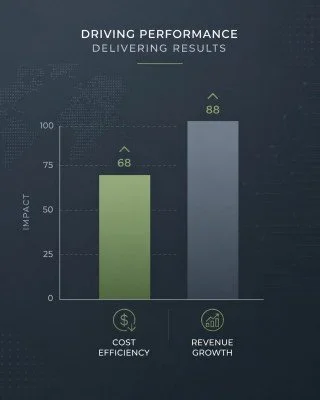
For the top performers: the early adopters: the numbers were even more dramatic:
• 68% reduction in operating costs.
• 89% revenue growth.
• 19x median ROI on AI investments.
This isn't just about "doing more with less"; it's about unlocking capacity that previously didn't exist. ServiceTitan’s 2026 industry report confirms this sentiment, with 74% of residential contractors viewing AI as the primary driver of efficiency. Early adopters are already reporting 48% higher productivity and 45% in total time savings across their entire workforce.
Transforming Unit Economics
Historically, residential service companies have struggled with margin pressure as they scale. Adding more trucks meant adding more dispatchers, more customer service reps, and more room for human error in quoting and scheduling.
AI has broken that linear relationship between labor and revenue.
Hyper-Efficient Dispatching: AI agents now manage inventory and labor scheduling in real-time. This ensures that the right technician with the right parts is sent to the right job, maximizing "billable hours" and minimizing windshield time.
Precision Pricing: Automated pricing engines eliminate the "guessing game" often found in field estimates. By analyzing historical data and current material costs, companies can protect their margins on every single ticket.
24/7 Customer Interaction: AI-powered SMS and voice tools are converting leads into appointments at rates far higher than traditional call centers, often generating up to 10% of all new appointments with zero human intervention.
For founder-owners, this means a business that is not only more profitable but also significantly easier to manage. For Private Equity buyers, it represents an entirely new underwriting thesis.

The Valuation Gap: 7-9x vs. 4-6x EBITDA
At Boxwood Partners, we track client transactions closely to understand how the market is pricing these technological shifts. The most compelling evidence of the "AI Premium" is found in the valuation multiples.
Traditional residential service operations are currently trading in the 4-6x EBITDA range. However, firms that have successfully integrated AI into their core operations are seeing multiples of 7-9x EBITDA.
Why the massive gap? Private Equity buyers are no longer just looking at historical performance; they are underwriting the "AI upside." Most PE firms now expect 6-8 percentage point EBITDA margin improvements within the first 12 months post-acquisition simply by deploying modern AI stacks.
In the $340 billion residential services market, the divergence is clear:
• AI Adopters: Growing ~47% YoY, with margins expanding from 8% to 14%.
• Non-Adopters: Growing ~8% YoY, facing mounting margin pressure from rising labor costs.
Is Your Business AI-Ready?
Despite the clear benefits, the transition is still in its early innings. An ACHR survey found that while 73% of residential contractors believe early adoption creates a competitive advantage, only 25% are actually using AI today.
This creates a unique window of opportunity for owners considering an exit. If you have already begun the journey toward digital transformation, your business is worth significantly more today than it was two years ago. If you haven't, you risk being left behind as the market bifurcates.

Residential services have always been a "safe" investment because the work is physical, local, and trust-based. AI doesn't change that; it reinforces it. By automating the mundane, companies can focus on the human element: the service delivery that ultimately builds a brand.
As sell-side advisors, our goal is to ensure our clients receive credit for the "future-proofing" they’ve built into their businesses. The market is currently rewarding the "Old Economy" in ways we haven't seen in decades, provided that old economy business has a new economy brain.
To learn more about how Boxwood Partners helps residential service companies navigate the M&A landscape, visit our Transactions page or contact us directly.