
How Quality of Earnings Impacts Your Sale Price(And How to Get Ahead of It)

You've built a business worth $100 million or more. You're looking at EBITDA multiples in the 11-13x range. The LOI is signed, and everyone's shaking hands. Then the buyer brings in their Quality of Earnings team.
This is where deals get real, and where a lot of sellers get caught off guard.
A QoE analysis is essentially a financial deep-dive that goes way beyond your tax returns or audited statements. It's the buyer's way of confirming that the earnings you've reported are actually sustainable, repeatable, and not inflated by accounting tricks or one-time events. And when you're talking about a deal this size, every dollar of adjusted EBITDA matters, a lot.
Why QoE Is the Make-or-Break Moment
Let's say you're sitting on $8 million in EBITDA, and the buyer's offering 12.5x. That's a $100 million valuation. Nice.
But here's the thing: they're not paying 12.5x on your reported EBITDA. They're paying it on your normalized EBITDA, the number that survives the QoE process.

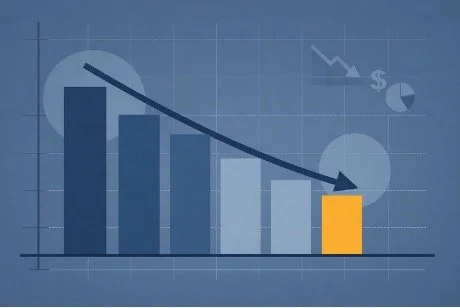
If the QoE team finds issues, things like non-recurring revenue, inconsistent accounting, aggressive add-backs, or revenue recognition problems, they're going to adjust your earnings downward. And that adjustment comes straight out of your sale price.
Find $500K in "hair" on the numbers? At a 12x multiple, that's a $6 million price chip. Find $1 million in questionable adjustments? You just lost $12 million.
That's why QoE isn't just a box to check. It's the moment where your valuation either holds up, or doesn't.
What Buyers Are Really Looking For
When a buyer commissions a QoE report, they're asking a pretty simple question: "Can we trust these numbers?"
They want to know:
• Is this EBITDA repeatable, or was it a great year that won't happen again?
• Are there accounting inconsistencies or errors that inflate earnings?
• Is revenue recognized properly, or are you pulling future revenue into the current period?
• Are the add-backs legitimate, or are they wishful thinking?
• Is there customer concentration risk that makes future earnings shaky?
The QoE team isn't trying to be adversarial (well, usually). But they are trying to de-risk the deal for their client. And if they find things that make your earnings look less reliable, they're going to adjust the numbers: and the buyer's going to use those adjustments to renegotiate.
Common Adjustments That Lead to Price Chips
Here are the usual suspects that create problems during QoE:
Revenue recognition issues. If you're booking revenue before it's actually earned, or if there's inconsistency in how you recognize different revenue streams, that's going to get flagged. Buyers want to see clean, cash-basis revenue wherever possible: not accrual games that inflate the current period.
Non-recurring items. That big contract you landed last year that doubled revenue for six months? If it's not repeating, it's getting adjusted out. One-time events: good or bad: don't reflect the sustainable earnings a buyer is paying for.
Aggressive add-backs. Look, everyone adds back owner compensation, non-recurring legal fees, or that one-time office move. But if you're adding back your country club membership, your spouse's "consulting fees," or expenses that will absolutely continue under new ownership, the QoE team is going to call that out. And they should.
Related-party transactions. If you're paying above-market rent to a property you own, or buying supplies from a company your brother runs at inflated prices, those are going to get normalized to market rates. The buyer wants to see what the business looks like operating independently.
Inconsistent accounting policies. Switching between cash and accrual? Changing depreciation methods? Capitalizing expenses one year and expensing them the next? All of that creates noise that the QoE team has to clean up: and cleaning it up usually means adjusting earnings downward.
Customer concentration. If 40% of your revenue comes from two customers, that's not a QoE adjustment per se, but it does impact how the buyer thinks about risk: and risk impacts the multiple they're willing to pay.
The Cost of Getting Caught Flat-Footed
Here's what typically happens when sellers go into QoE unprepared:
The buyer's QoE team finds issues. They present a list of adjustments. Your EBITDA gets marked down by $750K, $1 million, maybe more. The buyer comes back and says, "Based on the QoE findings, we need to adjust the purchase price."
Now you're in a tough spot. You can push back, but if the adjustments are legitimate, you don't have much leverage. You can walk away, but you've already spent months in diligence and told your team the deal is happening. Or you can accept the lower price and feel like you left money on the table.
None of those are great options.
How to Get Ahead of It: Sell-Side QoE
The smart play? Commission your own QoE report before you go to market.
A sell-side QoE lets you control the narrative. You identify the issues, you make the adjustments, and you present a clean, defensible earnings story to buyers from day one. Instead of the buyer's team "discovering" problems and using them as negotiating leverage, you've already addressed them transparently.

Here's what a good sell-side QoE does for you:
It surfaces issues early. If there are accounting inconsistencies, aggressive add-backs, or revenue recognition problems, you find out about them while you still have time to fix them: or at least prepare a solid explanation.
It builds credibility. When you walk into a deal with a third-party QoE report in hand, you're signaling to buyers that you're serious, transparent, and confident in your numbers. That creates trust: and trust protects valuation.
It reduces surprises. Buyers hate surprises. If your sell-side QoE has already normalized your earnings and documented the adjustments, the buyer's QoE team has less to "find." That means fewer price chips and a smoother path to close.
It speeds up diligence. When buyers see that you've already done the work, their diligence process moves faster. They're not starting from scratch: they're validating what you've already presented. Faster diligence means less deal fatigue and fewer opportunities for the deal to fall apart.
What to Focus On Before QoE
If you're not ready to commission a full sell-side QoE yet, here are some things you can clean up on your own:
Normalize your add-backs. Be honest about what's truly a non-recurring expense and what's just something you don't want to pay for anymore. Stick to defensible add-backs: owner comp, one-time legal fees, non-recurring events: and document everything.
Align your accounting policies. Make sure you're applying the same methods consistently yearover-year. If you've been inconsistent, get that cleaned up now.
Separate sustainable revenue from one-time wins. Break down your revenue by source and make it crystal clear which streams are recurring, which are project-based, and which were one-off contracts that won't repeat.
Get your customer concentration under control. If you have a handful of customers driving most of your revenue, diversify if you can: or at least have a story ready about why those relationships are sticky and long-term.
Clean up related-party transactions. If you've got sweetheart deals with entities you control, normalize those to market rates and document the adjustments.
The Bottom Line
At deal sizes around $100 million with 11-13x multiples, Quality of Earnings isn't a formality: it's the moment where your valuation either holds up or starts to crack. Every adjustment the QoE team makes comes straight out of your purchase price, and at those multiples, even small adjustments create massive swings in enterprise value.
The best way to protect your valuation? Don't wait for the buyer's QoE team to find the problems. Commission a sell-side QoE, clean up your earnings story, and go to market with a defensible, transparent financial picture. You'll build credibility, reduce surprises, and keep the deal on track: without leaving millions on the table.
Because when you're playing for stakes this high, you don't want to find out there's "hair" on your numbers when it's too late to do anything about it.